The Future of AI in Video Production
AI Labster
AI Creative Studio
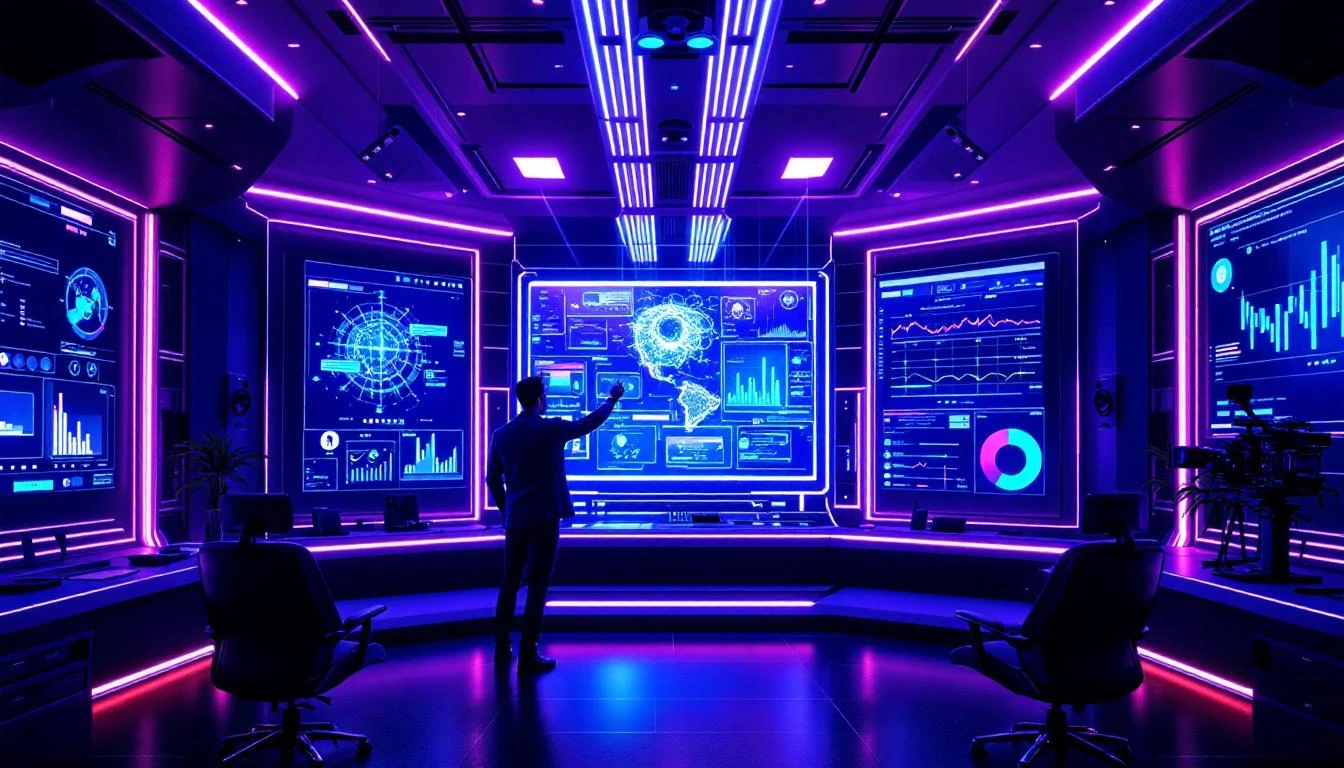
The video production landscape is undergoing a seismic shift. What once required massive budgets, sprawling studios, and armies of specialists can now be achieved with a laptop and the right AI tools. But this isn’t just about cutting costs—it’s about unlocking creative possibilities that were previously unimaginable. At AI Labster, we’re building these workflows into every project.
The Current State of AI Video
In 2026, AI video generation has matured significantly. Tools like Sora, Runway Gen-3, and Pika Labs are now capable of producing footage that, in many cases, is indistinguishable from traditionally shot material. The implications for creative studios are profound.
We’re seeing AI used across the entire production pipeline: from concept visualization and storyboarding to final compositing and color grading. The technology excels particularly in areas that were traditionally time-consuming or expensive—think complex visual effects, dynamic backgrounds, and seamless object removal. For a hands-on look at these tools, our guide to AI-powered post-production covers the practical applications.
Key Applications Transforming Production
1. Pre-Production and Visualization
Before a single frame is shot, AI can help visualize concepts with unprecedented detail. Directors can now generate mood boards, storyboards, and even rough cut previews using nothing but text descriptions. This accelerates the approval process and ensures everyone on the team shares the same vision.
Tools like Midjourney and DALL-E 3 allow directors and creative directors to iterate through dozens of visual concepts in a single morning. What once required a dedicated storyboard artist weeks of work can now be reviewed, revised, and approved in a single stakeholder session. The downstream effect on production schedules is significant—fewer surprises on set, tighter shot lists, and more focused crew time.
2. B-Roll and Supplementary Footage
One of the most practical applications is generating B-roll footage. Need a sweeping aerial shot of a city at sunset? A time-lapse of clouds rolling over mountains? These can now be created in minutes rather than requiring expensive drone crews or stock footage licenses.
Beyond simple environment shots, AI-generated footage can fill gaps that would otherwise require expensive reshoots. Missed a cutaway during production? Generate a contextually matching insert. Need seasonal variation in a campaign that was shot in summer? AI can synthesize convincing winter or autumn alternatives from the same source material.
3. Post-Production Enhancement
AI-powered post-production tools are revolutionizing color grading, audio enhancement, and visual effects. Automated rotoscoping that once took hours now happens in seconds. Noise reduction, stabilization, and upscaling have all been dramatically improved by machine learning algorithms.
Read our AI video production guide for a comprehensive breakdown of which tools matter most at each stage, and our AI post-production guide for a deep dive into finishing workflows.
Real-Time AI in Production Workflows
One of the most exciting near-term developments is the integration of AI directly into live production environments. This is no longer theoretical—several capabilities are already in active use on professional sets.
On-Set AI Monitoring
AI systems can now monitor live footage for exposure, focus, and composition consistency in real time. Camera operators receive instant feedback when a shot drifts outside agreed parameters. This removes the need for dedicated on-set color technicians on smaller productions and dramatically reduces the number of unusable takes.
Real-Time Background Replacement and Compositing
Virtual production stages powered by AI compositing allow small teams to shoot in front of simple green screens and see the final composite environment live through the viewfinder. Unlike the LED volumes used in high-budget productions, AI-driven approaches require minimal physical infrastructure. A single operator can manage environment swaps during a shoot day, giving directors the flexibility to test multiple locations in a single session.
AI-Assisted Directing
Emerging tools can analyze shot footage in real time and suggest alternative framings, pacing adjustments, or coverage gaps based on the script and previous takes. This is particularly valuable for directors working without a script supervisor, giving AI a monitoring role that keeps production disciplined without slowing the creative pace.
How AI Is Changing Creative Roles
The conversation around AI and creative jobs often defaults to displacement anxiety. The reality is more nuanced and, frankly, more interesting: AI is reshaping what it means to do creative work, not eliminating the need for it.
Editors as Creative Directors
When AI handles rough assembly, editors spend less time on timeline mechanics and more time on story. The craft shifts from “which take is technically clean” to “which performance serves the narrative.” Editors who embrace this transition become more valuable, not less, because their creative judgment is applied at a higher level of the process.
Colorists as Brand Strategists
AI color matching handles the grunt work of technical consistency across a timeline. Colorists are freed from repetitive shot-matching to focus on the expressive, interpretive work that creates a film’s visual identity. The best colorists are now working at the intersection of brand strategy and cinematography—a genuinely new creative discipline.
Directors and the Expanded Canvas
The availability of AI-generated environments, characters, and visual effects means directors can conceive shots that were previously impractical at any budget below studio scale. A mid-tier branded content director can now execute sequences that would have required a VFX house and a seven-figure budget five years ago. The creative ceiling has risen substantially.
This shift does require adaptation. Directors need a working understanding of AI tools, their strengths, and their failure modes. Productions that thrive are those where the director has developed a fluency with the technology and treats it as a collaborator with particular capabilities—not a magic button, and not a threat.
Let's build your AI video production workflow
AI Labster specializes in integrating AI tools into professional production pipelines. Talk to our team about what's possible for your next campaign.
Explore Our ServicesChallenges and Considerations
Despite the excitement, there are important considerations. Quality control remains crucial—AI can produce inconsistent results, and human oversight is essential for maintaining brand standards. There are also ongoing discussions about copyright, particularly when AI-generated content draws from training data. We explore these concerns in depth in our piece on the ethics of AI in creative work.
At AI Labster, we approach these challenges with transparency. We’re careful about how we use AI-generated content, ensuring our clients understand both the capabilities and limitations of the technology. The goal is always to serve the creative vision, not to replace human artistry.
Consistency Across Long-Form Content
One of the harder unsolved problems is maintaining visual consistency across longer content formats. AI generation excels at individual shots but can struggle to maintain character appearance, lighting continuity, or environmental coherence across a full five-minute piece. Hybrid workflows—where AI generates elements that are then hand-composited by a skilled operator— are currently the most reliable approach for anything beyond short social content.
Client Education and Expectation Management
Clients sometimes arrive with unrealistic expectations in both directions: either assuming AI can produce broadcast-ready content with no human involvement, or dismissing AI-assisted workflows as somehow less legitimate than traditional production. Educating clients on what AI does well and where human expertise remains essential is an increasingly important part of the creative director’s job.
What’s Next?
Looking ahead, we expect to see even tighter integration between AI tools and traditional production workflows. Real-time AI generation during live shoots, more sophisticated character animation, and better consistency across long-form content are all on the horizon.
The next major leap will likely come in AI systems that can maintain coherent visual worlds across extended projects—persistent characters, consistent environments, and style continuity that currently require painstaking human oversight. When that capability matures, the scale at which branded content can be produced will expand dramatically.
The studios that will thrive are those that embrace AI as a creative partner while maintaining the human touch that makes content truly resonate. It’s not about choosing between AI and traditional methods—it’s about combining them in ways that push creative boundaries. One industry where this is already happening at scale is hospitality — see how in our AI hotel video production case study, and browse the results in our gallery.
Ready to explore AI video production?
Our team can help you integrate AI tools into your production workflow while maintaining the quality and creativity your brand demands. Explore our hotel video services or get in touch directly.
Get in Touch
Ready to create something remarkable?
We help brands produce stunning visual content with AI — faster and more cost-effectively than traditional production.