AI Video Production: How It Works & Costs
AI Labster
AI Creative Studio
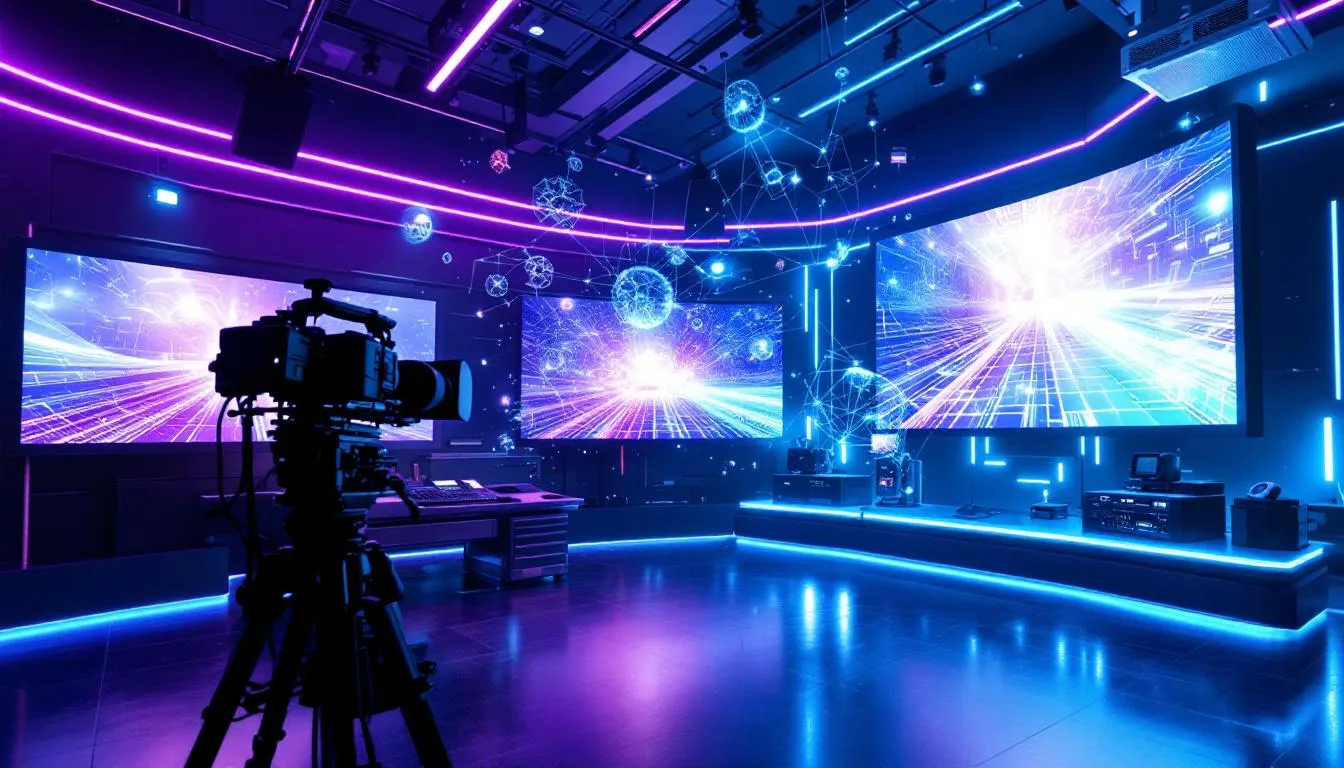
Three years ago, “AI video production” meant animated slideshows with stock footage and a robotic voiceover. Today it means cinematic brand films, atmospheric destination reels, and full campaign libraries delivered in days rather than months — at a fraction of the cost of a traditional crew.
The technology has matured fast. But the hype has kept pace, which means most businesses approaching an AI video production company for the first time carry a mix of inflated expectations and genuine uncertainty. They’ve heard AI can generate video from a text prompt. They’ve also heard it produces hands with six fingers and impossible physics. Both were true at some point. Neither is an accurate picture of what a skilled AI production team delivers today.
This guide is for anyone trying to cut through the noise. We cover what AI video production actually involves technically, how a real project runs from brief to delivery, what you should expect to pay, where AI matches traditional production quality and where it doesn’t, and how to choose an AI video production agency that will deliver results rather than impressive demos followed by disappointing finals. We wrote it from our own experience as an AI video production company — which means we have a stake in AI looking capable, but also a professional obligation to be honest about where it belongs and where it doesn’t.
What AI Video Production Actually Means
“AI video production” is not a single technology or a single workflow. It describes a spectrum of approaches, and the term is used — sometimes loosely — to cover all of them.
The spectrum
At one end, AI-assisted production uses traditional filming combined with AI tools in post: automated editing, AI-powered colour grading, noise reduction, and upscaling. The footage is real; the efficiency is AI-driven. This is already standard practice at most forward-looking production companies, including ours.
In the middle sits AI-augmented production: a mix of real footage and AI-generated visuals. A hotel’s lobby might be real; the drone sweep over the coastline might be AI-generated. Product photography might combine actual products with AI-created backgrounds and lighting. This is where much of the practical commercial work happens — AI fills the gaps that would otherwise require expensive additional shooting days.
At the other end is fully AI-generated video: imagery, motion, and atmosphere created entirely by generative models with no traditional camera involved. This is genuinely useful for specific applications — abstract brand identity films, stylised visuals, speculative or futuristic content — but it is not a wholesale replacement for every type of video production.
Key technologies
Several distinct technologies drive modern AI video production. Generative video models (Sora, Runway Gen-4, Kling, and others) create motion footage from text and image prompts. Neural rendering systems create photorealistic lighting and material simulation. AI upscaling (tools like Topaz Video AI) can bring lower-resolution source material to 4K broadcast standard. Automated editing assistants analyse footage and assemble rough cuts based on script markers and pacing guidelines. Each has its strengths, and a good production team knows which tool to apply at which stage.
What “AI-produced” means in practice
It does not mean pressing a button and waiting. Every piece of commercial AI video requires creative direction — deciding what to generate, how to prompt, what to discard, what to keep, and how to assemble it into something coherent. AI is the instrument; a human creative director plays it. The quality of the output is directly proportional to the quality of the creative direction applied throughout.
This is the most important distinction between AI video production and the automated template tools you may have encountered. Template video tools produce predictable, formulaic results from a preset structure. AI video production, done properly, produces original creative work where AI technology handles the visual heavy lifting while experienced humans drive every creative decision.
The Production Workflow
A well-run AI video production project follows a process that should feel familiar from traditional production — because the fundamentals of good video work haven’t changed, even if the tools have.
1. Creative brief and brand guidelines
Every project begins with understanding your brand: visual identity, tone of voice, target audience, and the specific goal of this piece of content. What does success look like? What has and hasn’t worked before? What are the hard constraints — colours, logo usage, things that must appear, things that must not? The better this brief, the better the output at every subsequent stage.
2. Reference gathering
Before any AI generation begins, the creative team builds a visual reference library. This includes existing brand assets, competitor work to position against, visual references that capture the desired aesthetic, and any footage or photography the client already owns. These references directly inform the direction and prompting of every generated element.
3. AI generation with creative direction
Generation happens in iterative rounds, not a single pass. The creative director prompts, evaluates results, refines the direction, and repeats. Most shots that appear in a final video are selected from a significantly larger volume of generated options. This is not inefficiency — it is the process by which quality is achieved.
4. Human refinement
Raw AI output is not a finished video. Every element goes through editing, colour grading, and sound design by human specialists. AI-generated footage is composited, timed to music, and shaped into a narrative structure. Voiceover, music licensing, and audio mix are all handled in this phase. For a detailed look at the AI tools that accelerate this stage, our guide to speeding up post-production covers the practical toolkit.
5. Review and revision cycles
A structured review process with defined revision rounds keeps projects on track. Expect to see a rough cut, provide consolidated feedback, see a refined version, and repeat. Good agencies define revision scope clearly upfront — how many rounds, what counts as a revision versus a scope change.
6. Final delivery
Final deliverables are formatted for every required platform: broadcast masters, social cutdowns, vertical formats for Stories and Reels, compressed web versions. Delivery specifications should be agreed at brief stage, not discovered at the end.
Cost Breakdown: What AI Video Production Actually Costs
The honest answer is: significantly less than traditional production for most commercial video work, but not free, not instant, and not uniform across every project type.
The cost drivers in AI video production are complexity of the creative challenge, degree of brand customisation required, number of revision cycles, and turnaround speed. A straightforward brand overview video with clear references and a single revision round costs far less than a technically complex campaign with multiple formats and a compressed deadline.
Here is a realistic comparison across common project types:
| Project Type | Traditional | AI Production | Notes |
|---|---|---|---|
| Brand overview video (60–90s) | $10K–$30K | $1K–$5K | Biggest savings — no crew, no location fees |
| Product / service showcase | $5K–$15K | $500–$3K | AI excels at atmospheric visual storytelling |
| Social media content (10 videos) | $5K–$20K | $1K–$5K | Volume is where AI really shines |
| Full campaign (5+ videos) | $25K–$100K+ | $5K–$20K | Economies of scale multiply with AI |
The savings are largest on projects that would traditionally require large crews, specialist equipment, or expensive locations. A brand film that relies on cinematic atmosphere — golden light, sweeping vistas, dynamic motion — can often be produced at AI cost because AI generative tools are genuinely good at that category of visual content.
The savings are smaller when the project is fundamentally dependent on things AI cannot generate: a specific real person, a specific real place, candid human moments, or highly bespoke live-action sequences. In those cases, traditional production remains necessary and AI plays a supporting rather than lead role.
One area where the cost comparison is unambiguous is volume. Producing ten variations of a social media video — different aspect ratios, seasonal copy, multiple markets — with a traditional crew would require either multiple shoot days or compromises on quality. With AI production, that volume is achievable within the cost envelope of a single traditional shoot day.
Quality: AI vs Traditional Production
This is where most guides either oversell or undercredit AI. The honest picture has genuine nuance.
Where AI matches or exceeds traditional production
Atmospheric and environmental footage is where current AI generation is strongest. Sweeping aerial shots, golden-hour landscapes, architectural exteriors at magic hour, time-lapses, underwater sequences, and complex visual effects that would require significant VFX budgets in traditional production — AI handles these with impressive quality. For brands in hospitality, travel, real estate, and luxury goods, this category covers a large portion of their visual needs.
Consistency across a content library is a structural advantage. A traditional shoot produces footage from a specific day, in specific weather, with specific conditions. AI can generate content that maintains consistent visual language across dozens of pieces — same aesthetic treatment, same colour palette, same atmospheric quality — regardless of when the project runs. This is enormously useful for brands that need ongoing content.
Brand-aligned visual development moves faster with AI. Generating multiple visual directions to show a client in the early stages of a project costs a fraction of what pre-production concept work costs in traditional production. You can show ten distinct aesthetic directions before committing to one, then refine with significantly more creative freedom.
Visual effects and motion graphics that would require specialist VFX artists in traditional production are increasingly achievable within AI production budgets.
Where traditional production still wins
Real human performance remains the domain of traditional production. Documentary interviews, testimonial content, narrative pieces requiring genuine emotion and authenticity, brand campaigns built around specific people — these require cameras, lights, and actual humans in a room. AI-generated characters have improved substantially but do not yet provide the authenticity that effective testimonial or human-centred content requires.
Specific locations that must genuinely be a specific place — “our restaurant, on a Tuesday afternoon in autumn” — cannot be AI-generated. AI can produce photorealistic restaurant interiors, but it cannot produce photorealistic footage of your restaurant.
Documentary and journalistic content by its nature requires reality. No amount of AI generation is a substitute.
Complex live-action sequences with specific talent, specific choreography, or specific product interaction still require a crew.
The hybrid approach
The most effective work often combines both: real footage for the elements that must be real, AI production for the atmospheric, environmental, and stylistic elements that surround them. A hotel shoot might capture real guest interactions and specific property details with a small camera crew, then use AI production to create the cinematic atmospheric content — the dawn over the coastline, the immaculate plating shot, the slow aerial reveal — that no half-day shoot could cover anyway.
This is not a compromise. It is frequently the highest-quality outcome available within a realistic budget. For a broader view of where AI video technology is heading, our overview of the future of AI video production covers the trajectory in more depth.
Industries Using AI Video Production
AI video production is industry-agnostic in principle but has seen fastest adoption in sectors where atmospheric visual content carries significant commercial weight and traditional production costs have historically been a significant barrier.
Hospitality — hotels, resorts, and restaurants — is one of the strongest use cases. These businesses need high volumes of beautiful visual content for booking platforms, social media, seasonal campaigns, and direct booking funnels, and they need it at cost points that make sense for the marketing budget of a mid-sized property. Traditional production at the quality level that competes with luxury brand imagery has historically been out of reach for most properties below the luxury tier. AI production changes that calculation fundamentally. We explore this in detail in our guide to AI video production for hotels.
Real estate and property shares many of the same dynamics: the need for atmospheric, aspirational visual content that presents spaces at their best, at volume, without the production cost that architectural photography and videography firms typically charge at the high end of the market.
E-commerce and product brands benefit particularly from the volume economics. Seasonal campaigns, variant showcases, market-specific adaptations, and social content for multiple platforms — the content demand for a mid-sized e-commerce brand is substantial, and AI production can address it at a cost that makes organic video content viable where it was previously feasible only for large brands.
Corporate and B2B brands with a need for explainer content, brand story films, and conference or event materials find that AI production delivers professional-quality output without the logistical complexity of coordinating a full crew around internal stakeholders and facilities.
Tourism and destination marketing organisations face the challenge of needing to represent entire destinations — a diversity of landscapes, experiences, and seasons — with finite budgets. AI production can generate a breadth of visual content that no single shoot itinerary could capture. Our full guide to tourism video production covers the specific considerations for this sector.
Fashion and luxury brands with high aesthetic standards and specific visual language requirements have increasingly found that AI production, when directed by a team with the right aesthetic sensibility, can produce content that meets their standards at campaign scale — particularly for digital and social channels where the content volume required has outpaced what traditional production budgets can sustain. For brands in this category, our brand campaigns service is particularly relevant.
How to Choose an AI Video Production Company
The market for AI video production has grown fast enough that there are significant quality differences between providers. Here is what to look for and what to avoid.
What to look for
Portfolio quality and range. The portfolio should show finished, polished work — not raw AI generations or heavily caveated “experiments.” Look for variety: different brand aesthetics, different content types, evidence that the creative direction can adapt to different visual languages rather than producing a signature style that every client gets.
A defined creative process. A professional AI video production agency should be able to explain their workflow clearly: how they approach a brief, what the generation and refinement process involves, how revisions are structured, what client involvement is expected at each stage. Vague answers to process questions suggest the process is also vague.
Clear revision and delivery policies. How many revision rounds are included? What formats are delivered? What is the turnaround from brief to first cut? These should be specified, not negotiated each time.
Human creative direction. Ask specifically who directs the creative work. The answer should be a person or team with a demonstrable creative background. AI is the production technology; the creative direction is the service you are paying for.
Red flags
Avoid any provider that cannot show a substantial portfolio of completed client work. AI video generation is accessible enough that many people have experimented with the tools; very few have the creative direction capability to produce commercially usable results consistently.
Be cautious of promises of instant results, very short turnarounds, or price points significantly below market rate. Quality AI video production requires time for iteration and refinement. A provider claiming otherwise is either misrepresenting the process or cutting corners that will show up in the final product.
No human creative direction is the most significant red flag. Automated pipeline providers that simply run your brief through a generation tool and deliver the raw output are not AI video production companies — they are AI generation services, and the quality of their output reflects that distinction.
Questions to ask
Before engaging an AI video production company, it is worth asking directly: Who directs the creative? What does the revision process look like, and how many rounds are included? In what formats will final deliverables be provided, and are platform-specific cutdowns included? What is a realistic timeline from brief to approved final? Can you speak to a previous client?
The answers to these questions will quickly distinguish serious production companies from operations that are effectively selling access to generation tools with minimal value added.
Looking for an AI video production partner?
We combine experienced creative direction with AI production technology to deliver cinematic content at a fraction of traditional costs. See our work and judge for yourself.
View Our PortfolioGetting Started with AI Video Production
The most common mistake brands make when approaching AI video production for the first time is treating it as a cost-saving shortcut rather than a creative production process. The output is only as good as the brief, the references, and the creative direction applied. Approaching it with that understanding sets up a better outcome from the start.
Start with a single project. Rather than committing a full annual content budget to AI production immediately, start with one well-defined piece of content — a brand overview video, a campaign hero film, or a set of social content. Use it to evaluate the quality, the process, and the working relationship before scaling up.
Invest in a clear brief. The clearest brief produces the best AI video. Provide your brand guidelines, visual references, and specific information about your audience and what the content needs to achieve. If you have existing assets — photography, previous video work, brand films — share them. All of this informs the creative direction in ways that materially improve output quality.
Provide specific visual references. Mood boards and reference videos are not optional extras — they are the primary input that shapes the creative direction. “Cinematic and luxurious” is a starting point. Three reference videos that capture the exact quality you are aiming for is actionable direction.
Expect iteration. The first cut of an AI-produced video is a starting point, not a finished product. A good production company presents a first cut that is directionally correct and refines from there. Budget time for two to three rounds of meaningful feedback, and give consolidated, specific notes at each stage rather than impressionistic reactions.
Measure against your goals. The right benchmark for an AI-produced video is whether it achieves your marketing objectives — booking conversions, brand recall, engagement rate, lead generation — not whether it is indistinguishable from a $100,000 production. In most cases, audiences are not making that comparison. They are responding to whether the content makes them feel something and whether it motivates action.
If you are ready to explore what AI video production can do for your brand, you can review our services to understand the full range of what we offer, or get in touch directly with a brief and we will tell you honestly whether AI production is the right fit and what a project would involve.
AI video production is not the right tool for every project. But for the projects it suits — atmospheric brand storytelling, campaign content at scale, visually driven marketing for hospitality, property, tourism, and luxury brands — it offers a combination of quality and economics that was not available five years ago. The question is not whether to engage with it. It is how to do it well.
See what AI production can do for you
From video to post-production to brand campaigns — explore how AI-powered production delivers cinematic results at a fraction of traditional cost.