AI Video Production for Hotels & Resorts
AI Labster
AI Creative Studio
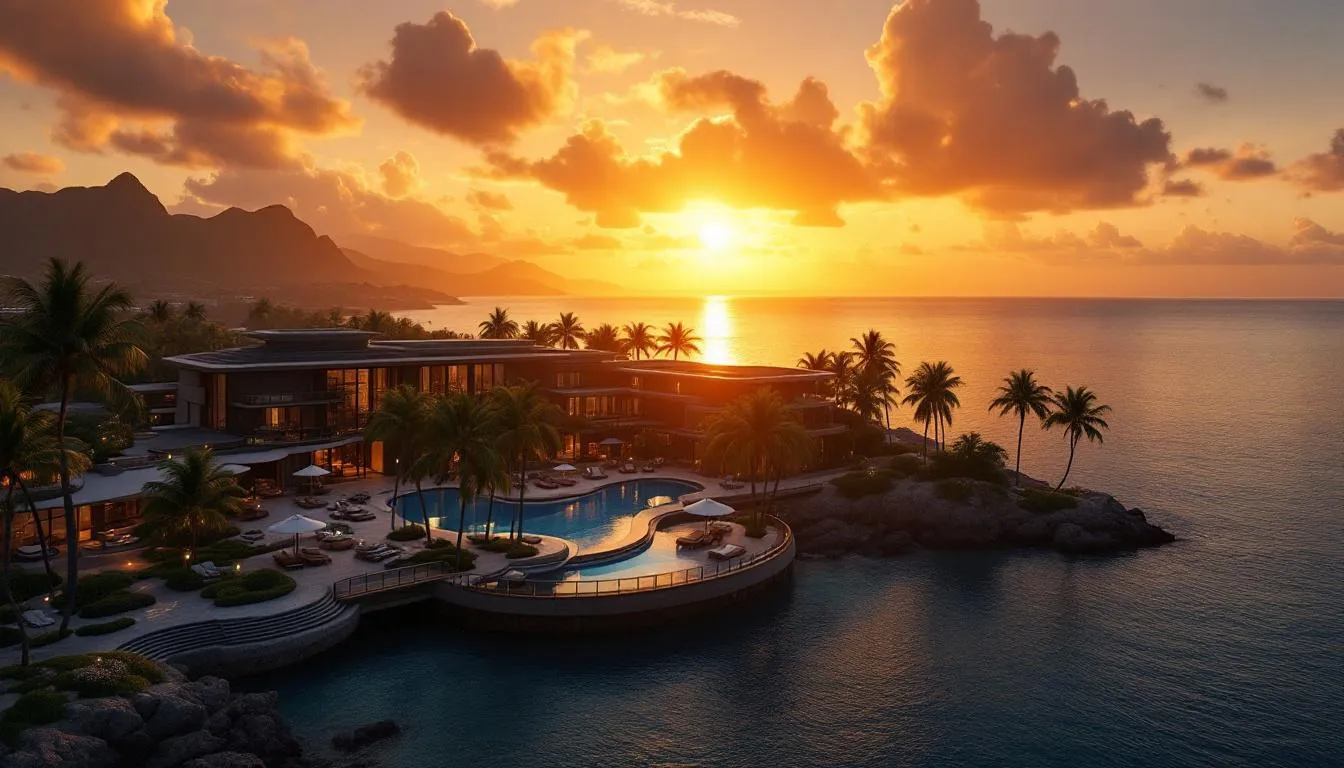
Hotel video production has a cost problem. A single brand film for a mid-size resort — the kind that runs 90 seconds and appears on the booking page, Instagram, and the property’s homepage — can run anywhere from $15,000 to $50,000 by the time you factor in crew, equipment, travel, post-production, and the rooms you’ve taken out of inventory for shooting days. For boutique independents, that number is often simply off the table.
AI-powered hotel video production changes that calculation. It’s not a gimmick and it’s not magic — but for the right use cases, it delivers cinematic results at a fraction of the traditional cost and in days rather than weeks. In 2026, it’s a production approach that serious hospitality brands are beginning to build into their content strategy.
This guide explains exactly how AI video production works for hotels: the technology behind it, where it performs well and where it falls short, what the production workflow actually looks like, what it costs compared to traditional approaches, and how to decide whether it’s the right fit for your property.
What AI Video Production Actually Is
There’s a lot of noise around AI video, and it’s worth cutting through it. AI video production for hotels is not a button you press to receive a finished film. It’s a set of tools and workflows that have become sophisticated enough, as of 2025 and into 2026, to generate photorealistic video content from reference inputs — and it still requires skilled creative direction to produce results worth publishing.
The spectrum of AI involvement in production runs roughly as follows:
AI-assisted editing sits at one end: AI tools that accelerate color grading, auto-generate captions, remove backgrounds, stabilize footage, or suggest cut points. This is the least dramatic form of AI involvement, but it’s been standard in professional post-production for a few years now.
AI-generated footage is where the technology has made its most striking leap. Given reference imagery — hotel photographs, architectural drawings, mood boards, competitor visuals — generative video models can now produce cinematic sequences that would have required a physical camera, a crew, and days of shooting. We’re talking about sweeping lobby establishing shots, smooth room tours that glide through space, aerial exterior sequences, atmospheric b-roll of pools and restaurants.
Hybrid workflows combine both: AI handles the heavy visual generation, human editors and directors provide the creative vision, pacing, sound design, and brand coherence that elevates raw AI output into something that actually converts.
What AI video is not: a template-based solution where you drop in your logo and get a generic hotel ad. Nor is it stock footage with your property’s name slapped on it. Done properly, the output is specific to your property and brand. What distinguishes it from traditional production is where the footage comes from — generation rather than a camera on a physical set — not a reduction in creative quality.
The technology underpinning this has advanced rapidly. Models that in 2023 produced blurry, artifact-ridden clips are in 2026 generating footage indistinguishable from drone and gimbal work for most practical purposes. The limitations that remain are real, but narrower than most people assume.
How AI Video Production Applies to Hotels
Hospitality is one of the industries where AI video production has the strongest product fit. Hotels are visual businesses where the gap between “what guests see before booking” and “what a real shoot would cost” is particularly acute.
Where AI performs well for hotel content:
Brand overview films are perhaps the strongest use case. These are the 60–90 second flagship videos that communicate the property’s atmosphere, category, and character. They rely heavily on architectural and interior footage — exactly what AI generation handles best. A sweeping approach to the facade at golden hour, a smooth pull through the lobby, a reveal of the pool at dusk: these are production moves that AI can now execute convincingly.
Room and suite tours are another strong fit. Structured walkthroughs that show bed configuration, bathroom finishes, views, and key amenities translate well into AI-generated sequences. You’re working from fixed architectural inputs — floor plans and existing photography — and the output serves the functional need guests have when researching accommodation.
Aerial and exterior sequences are often the most expensive element of traditional hotel production (drone operators, permits, weather dependency). AI handles these particularly well because the outputs are largely about architecture, landscape, and atmosphere rather than human interaction.
Seasonal content variations illustrate the economics clearly. A hotel that wants summer and winter versions of its brand video would traditionally require two separate shoots. With AI generation, once the base assets are built, updating the snow on the grounds, the light quality, the pool versus the fireplace — this is an iteration rather than a reshoot.
Where traditional production still wins:
Authentic guest interactions, candid emotional moments, and testimonials require real people having real experiences. AI can generate photorealistic figures in environments, but the authenticity that comes from a genuine guest reaction — laughter at breakfast, a couple watching a sunset — is not something generation tools replicate convincingly right now.
Live events, weddings, conferences, and any content that documents something that actually happened require cameras present when it happens. AI is generative, not documentary.
The sweet spot is a deliberate combination. AI handles the visual storytelling infrastructure — establishing atmosphere, showcasing the physical property, creating the cinematic palette. Traditional production captures the human moments that make a property feel lived-in and real. Hotels with a clear strategy for where each approach applies are getting better results than those committed exclusively to either.
For a broader look at how this fits into your overall content approach, see our hotel video marketing guide.
The Production Workflow
A professional AI hotel video production follows a structured process. Here’s how it works at AI Labster:
1. Brief and brand guidelines
The process starts with a creative brief: the video’s purpose (booking conversion, brand awareness, social media), target audience, tone, platform destinations, and any specific requirements. We also take in brand guidelines — color palette, typography style, music direction, whether the property skews luxury, lifestyle, boutique, or family. This shapes every generation decision downstream.
2. Reference material
Good AI video generation requires good inputs. We collect what the hotel already has: existing professional photography, architectural drawings or floor plans, any previous video assets, mood boards, and reference videos (even from competitor properties) that represent the aesthetic target. The quality of reference material directly correlates with the quality of the generated output.
3. AI generation and initial iteration
With brief and reference material in hand, our AI pipeline begins generating footage. This is an iterative process — initial outputs are reviewed, prompts are refined, generations are compared, and the best sequences are selected and developed further. This stage typically involves dozens of generation cycles before we have selectable footage for every shot the edit requires.
4. Human creative direction and refinement
Raw AI generation is a starting point, not a deliverable. Our editors and creative directors review all generated footage for quality, brand alignment, and visual consistency. Sequences that feel off — wrong light quality, inconsistent architecture, unnatural motion — are regenerated or supplemented. The goal is footage that holds up under scrutiny, not footage that’s technically AI-produced but obviously so.
5. Post-production
Selected footage goes through full post-production: color grading to establish the visual mood, sound design and music licensing, pacing and edit structure, title cards and lower thirds if required, and any graphic elements. This stage is where the raw material becomes a finished film.
6. Delivery in multiple formats
Final deliverables are typically formatted for multiple platforms simultaneously: landscape 16:9 for website and YouTube, square 1:1 for Instagram feed, vertical 9:16 for Stories and TikTok, and any specific cuts the client needs (60-second, 30-second, 15-second versions). This multi-format delivery is something AI workflows handle efficiently — the incremental cost of additional formats is low.
For more on the post-production side of this process, see our guide to speeding up post-production workflows.
Cost Comparison
Here’s where the economics become concrete. These ranges reflect genuine market rates in 2026 — we’re not comparing best-case AI against worst-case traditional.
| Approach | Cost per video | Timeline | Key considerations |
|---|---|---|---|
| Traditional on-location crew | $10,000–$50,000 | 2–4 weeks | Travel costs, permits, equipment hire, rooms out of inventory, weather dependency |
| AI production | $500–$5,000 | 3–7 days | No travel or permits required, no rooms out of inventory, easy seasonal updates |
| Hybrid approach | $3,000–$15,000 | 1–2 weeks | AI for architectural and atmospheric footage, traditional crew for guest interactions and key human moments |
A few things to note about these numbers. The $500 end of AI production reflects a straightforward 60-second brand video for a property with good existing photography. The $5,000 end covers more complex deliverable sets — multiple video lengths, several distinct content types, extensive revision cycles.
The hybrid approach in the $3,000–$15,000 range is often the most cost-effective path for hotels that need both property showcase content and authentic guest-presence footage. A one-day traditional shoot focused exclusively on human moments can be combined with AI generation for all the architectural and atmospheric footage, significantly reducing the traditional shoot scope and cost.
What AI production doesn’t change: the need for good creative direction, brand strategy, and post-production craft. The cost savings come from the generation side, not from eliminating skilled human involvement in the production process.
To see how this applies to your property specifically, visit our hotels production service.
What AI Can and Can’t Do: An Honest Assessment
We think honesty on this point matters. There are AI video vendors overpromising what the technology delivers — and hotels that buy in on those promises tend to be disappointed. Here’s our real assessment as of 2026.
What AI does well:
Consistent visual branding across properties. Hotel groups with multiple properties benefit particularly from AI production’s ability to maintain consistent visual language across different locations. Each property gets footage that looks like it belongs to the same family — same color treatment, same motion style, same atmospheric quality.
Seasonal and periodic updates without reshoots. Once the base production framework exists, updating content for seasonal campaigns — holiday positioning, summer packages, shoulder-season promotions — is a fraction of the original cost. You’re iterating on an existing asset rather than commissioning from scratch.
Property visualization from architectural plans. For pre-opening hotels and properties undergoing renovation, AI can generate accurate visualizations of spaces that don’t yet exist in their final form. This is genuinely useful for pre-launch marketing and for selling renovated rooms ahead of completion.
Cinematic b-roll and atmospheric footage. The wide establishing shots, the abstract texture close-ups, the slow-motion water and light — the category of footage that communicates “place and atmosphere” rather than “specific human action” is where AI generation is strongest.
Rapid iteration and A/B testing. Want to test two different opening sequences? Two different color grades? Two versions of your booking page video to see which converts better? AI workflows support this kind of iteration at a cost that makes testing viable.
Current limitations:
Real human interactions and authentic emotions. The warmth that comes from a real concierge greeting a real guest, or a family genuinely enjoying a pool together, reads differently to audiences than generated approximations. AI-generated human figures have improved dramatically, but they still don’t carry the same conviction for close, emotionally expressive content.
Specific staff and real guest appearances. If part of your brand story involves your actual team or real guest testimonials, that content requires cameras and real people.
Complex live-action sequences. Chef-in-the-kitchen sequences, yoga classes, cocktail preparation in motion — content that involves complex physical action in dynamic environments is at the harder end of what AI generation handles well today.
Some forms of hyperlocal authenticity. The actual view from a specific room window. The particular quality of light in your courtyard at 7am. The specific texture of your locally sourced stonework. AI can approximate these, but authentic documentation of exactly what a guest will experience still sometimes requires a camera at the property.
How to Evaluate Whether AI Production Is Right for Your Property
The decision isn’t binary. Most hotels benefit from a strategic combination rather than an all-or-nothing choice on either side.
Questions worth asking before you commit:
What’s your current content gap? If you have no video content at all, AI production is almost certainly the right starting point — getting something strong and cinematic in the market quickly, at a cost that’s viable, is more valuable than waiting until budget exists for a full traditional shoot.
What’s your timeline? If you have a campaign launching in two weeks, AI production can deliver. Traditional production can’t.
What content types do you need? If the brief is primarily architectural showcase — rooms, facilities, exteriors, atmosphere — AI is well-matched. If the brief is primarily guest experience and emotional story, you’ll want a traditional component.
What’s the content’s working life? Video tied to specific people (staff, guests) has a shorter shelf life than atmospheric property footage. AI-produced brand films can serve a property well for 18–24 months. The economics look even better over a two-year content horizon.
Red flags to watch for:
Be cautious of any vendor who claims AI can replace all forms of hotel video production. That’s not an honest position. AI production has genuine limitations and the properties getting the best results are using it strategically — combining it with traditional production where authenticity requires it, not as a blanket replacement.
Be equally cautious of approaches that are really just stock video with your logo dropped in. Good AI hotel video production uses your specific property as its reference point. Generic environmental footage of “a nice hotel” is not a substitute for content that actually represents your brand.
Curious what AI video production could look like for your property?
We'll show you real examples of AI-produced hotel content and give you an honest assessment of what it could do for your brand.
See Our Hotel WorkThe Bottom Line
AI video production is a tool, not a replacement for all forms of hotel videography. It excels at a specific and valuable category of content — architectural storytelling, atmosphere, property showcase, seasonal flexibility — and it does so at a cost and speed that makes professional video viable for hotels that couldn’t justify it before.
The properties benefiting most aren’t treating AI production as a shortcut. They’re using it as a deliberate strategic layer: AI handles the visual infrastructure of their brand content, traditional production captures the human moments that make a property feel real, and the combination produces a more comprehensive content presence than either approach alone.
If you’re starting from nothing, AI production is likely your fastest and most cost-effective path to a strong visual presence. If you already have some traditional production in the bank, AI gives you a scalable way to extend, update, and multiply that investment without commissioning new shoots every time your needs change.
The economics are real. The quality has crossed a threshold where it works. The question is whether you’re using it intentionally, or leaving it to competitors who are.
To discuss your specific production needs, get in touch.
Ready to elevate your property's visual identity?
We work with luxury hotels and resort groups to build visual content systems that scale — consistent brand quality across every property.