Hotel Video Marketing: The Complete Guide for 2026
AI Labster
AI Creative Studio
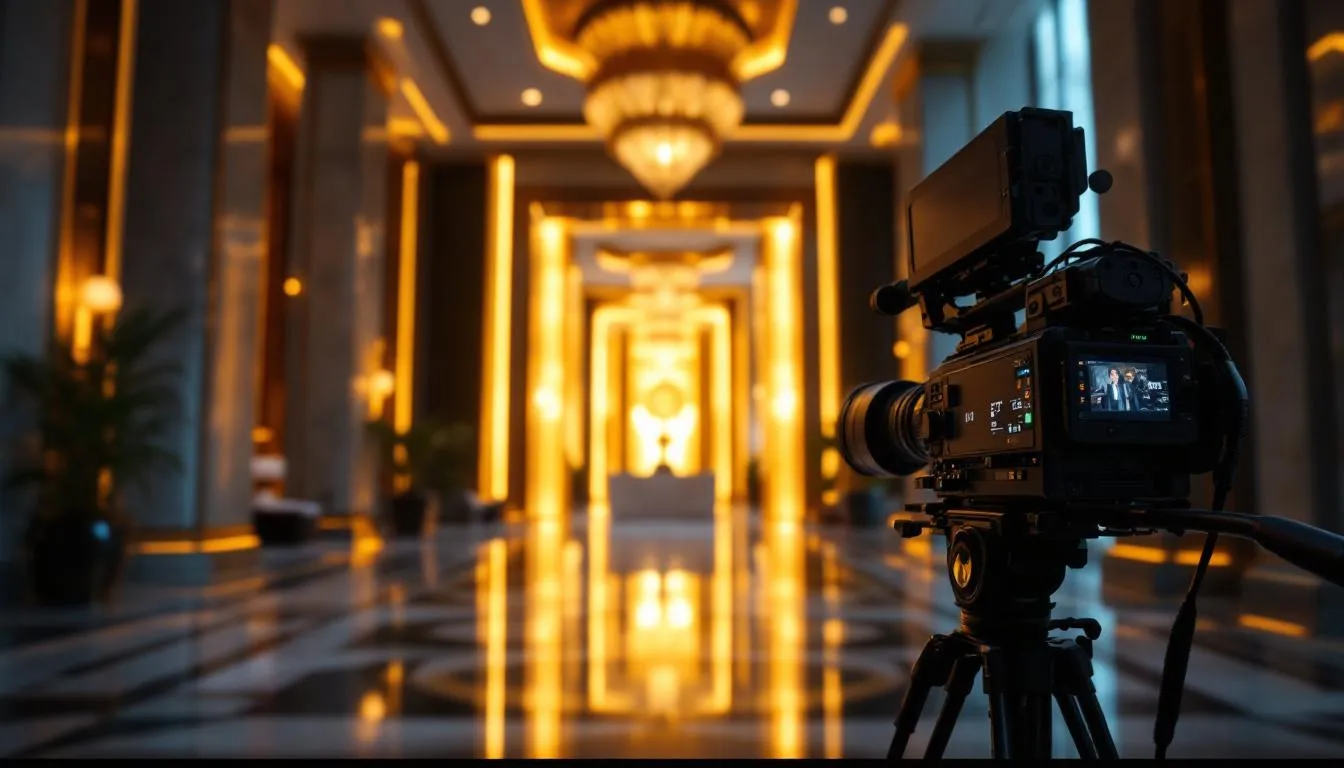
Video is no longer a nice-to-have for hotels. It’s the medium through which guests decide where to stay, and the gap between what travelers expect and what most hotels actually produce has never been wider. A potential guest browsing Booking.com spends an average of 90 seconds per property — but that same guest will watch a well-crafted hotel video for three to five minutes before making a booking decision. That’s the attention differential that separates video from every other content format.
The shift is structural. Platforms that drive hotel bookings — Instagram, TikTok, YouTube, Google, Expedia — have all moved toward video as their primary discovery surface. Guests who grow up on short-form video are now making significant travel purchases, and their benchmark for what “looks good” is set by content that costs nothing to consume but typically a great deal to produce. Hotels that haven’t adapted are losing bookings to properties with inferior offerings but superior visual storytelling.
This guide covers everything you need to build a hotel video marketing strategy that actually works: which content types to prioritize, where to distribute, how to measure results, and how the economics of production have changed thanks to AI. Whether you’re running a 12-room boutique or a 400-room resort, the principles apply — though the budget and execution will look different.
Why Video Marketing Matters for Hotels
The data on how travelers research accommodation is unambiguous: the process is overwhelmingly visual, and increasingly video-first. According to research from Phocuswire, nearly half of travelers use online video content before making accommodation decisions. Google’s own travel data shows that travel-related YouTube searches grow faster than any other category year over year.
These aren’t passive viewers, either. People watching hotel videos are actively comparing options and building emotional connections with properties they’re considering. Video does something photography cannot: it conveys movement, atmosphere, scale, and sequence. A guest can see how the lobby flows into the restaurant, how light moves through a suite at different times of day, and what it would feel like to swim in that pool at sunrise. This experiential preview dramatically reduces booking anxiety — the hesitation travelers feel when committing to a destination they haven’t visited before.
The Conversion Impact
The booking conversion numbers for video are hard to dismiss. Properties with video on their direct booking pages consistently see higher conversion rates than those without. Wyzowl’s 2025 Video Marketing Report found that 89% of marketers say video has given them a positive ROI — and hospitality is one of the categories where the effect is strongest, because the purchase decision is high-consideration and inherently emotional.
Time on page increases significantly when video is present. Bounce rates drop. And the quality of the traffic that does book improves: guests who’ve watched your video have a more accurate expectation of what they’re getting, which correlates with higher satisfaction scores and fewer disputes at check-in.
The Competitive Cost of Inaction
The flip side is what happens when you don’t invest. Independent hotels that rely solely on static photo galleries are increasingly invisible to younger demographics. On OTAs, the scroll is relentless — listings with video thumbnails capture attention that text and photos alone cannot hold. Properties without video content are already ceding ground to competitors who’ve figured this out.
The good news: most of your competition hasn’t. Fewer than 30% of independent hotels have professional video content. That’s a significant window of advantage for properties that move now. For a broader view of how video fits into your overall content mix, see our guide to hotel content marketing.
48%
Travelers use video before booking accommodation
<30%
Independent hotels with professional video content
5×
Longer time on page with video vs. photos only
Types of Hotel Video Content
Not all hotel video content serves the same purpose. Matching the format to the goal — and the channel — is the difference between content that converts and content that gets ignored. Here’s a breakdown of the core video types and when to use each.
Brand Films and Cinematic Overviews
These are the flagship pieces: 60–120 second films that capture the emotional essence of a property. Think sweeping establishing shots, intimate details, the feeling of an evening at the bar or a morning at the pool. Brand films aren’t designed to show every room type — they’re designed to make someone want to be there.
Brand films anchor your website homepage, live at the top of your OTA listings, and form the foundation of paid social campaigns. They require the most production investment but also deliver the most lasting value. A well-made brand film stays relevant for two to three years.
Room and Suite Tours
Where brand films sell atmosphere, room tours sell specifics. Travelers booking a superior suite at $600 a night want to see exactly what they’re paying for — the view, the bathroom, the bed configuration, the closet space. Individual room-type videos reduce uncertainty and increase conversion on high-value bookings.
These work particularly well on your direct booking engine, embedded beside the “Book Now” button where the decision moment happens. They’re also effective in OTA listings, where guests are comparing nearly identical price points between properties.
Aerial and Drone Footage
Aerial video communicates location, surroundings, and property scale in a way no ground- level shot can match. For resort properties, waterfront hotels, or any property where the setting is a selling point, aerial footage is often the highest-impact single asset you can produce.
The practical barrier has historically been cost and logistics: hiring a licensed drone operator, navigating airspace regulations, and managing weather dependencies adds time and expense to any shoot. AI-generated aerial footage has made this category significantly more accessible.
Guest Experience and Lifestyle Videos
Lifestyle content puts people in the frame. A couple at breakfast, guests at the pool, a family exploring the hotel grounds — this content bridges the gap between architectural photography and lived experience. It answers the implicit question guests ask: “Who stays here, and will I feel comfortable?”
These videos perform exceptionally well on social media, where human presence in the frame consistently outperforms purely architectural content in reach and engagement.
Short-Form Social Content (Reels, TikTok)
The 15–60 second vertical format has become its own distinct content category, with different editing rhythms, pacing, and hooks compared to traditional hotel video. The best-performing hotel content on Instagram Reels and TikTok tends to focus on a single compelling moment — a sunrise from a clifftop suite, a behind-the-scenes look at the kitchen, a guest reaction to an upgrade — rather than trying to compress a full brand film into 30 seconds.
Short-form is the content type with the shortest production cycle and the highest distribution potential. A well-timed Reel can generate organic reach equivalent to a paid campaign, at no media cost.
Virtual Tours
Interactive virtual tours allow prospective guests to navigate a property at their own pace, choosing which areas to explore. They’re particularly valuable for event spaces — meeting rooms, ballrooms, outdoor venues — where planners need to assess a space before committing to a booking. See our dedicated hotel virtual tours guide for a detailed breakdown of formats and platforms.
Testimonial Videos
Guest testimonials carry a different kind of credibility than any brand-produced content. A 60-second video of a real guest describing a specific experience — the wedding they held in your garden, the honeymoon suite, the service that went above and beyond — has conversion power that scripted marketing cannot replicate.
For a complete view of how video integrates with your photography strategy, see our hotel photography guide.
Distribution Channels
Producing hotel video content is only half the equation. Where you put it determines whether it reaches the right guests at the right moment in their booking journey.
Hotel Website
Your website is where video has the highest-leverage placement. Homepage hero videos set the initial emotional tone for first-time visitors and signal immediately that this is a property worth exploring further. Room-type pages with embedded tour videos see measurably higher conversion rates. The booking engine itself — the final step before purchase — benefits enormously from reassurance content embedded near the confirmation button.
Technical note: autoplay video on the homepage should be muted by default, with clear sound controls available. Heavy video files that slow page load will hurt SEO and user experience — use optimized formats (WebM or MP4 with compression) and consider lazy loading below the fold.
OTA Listings
Booking.com, Expedia, and Hotels.com all support video on property listings, but relatively few hotels take advantage of this. OTA listings with video content see higher click-through rates from search results pages — the thumbnail differentiates your listing in a sea of identical room photos.
The practical challenge is that OTA video specs vary by platform, so your production partner needs to deliver platform-specific exports rather than a single master file.
Social Media
Different platforms serve different stages of the guest journey. Instagram and TikTok are discovery channels — they introduce your property to people who weren’t actively searching for it. YouTube serves the research phase — longer-form tours and destination content that guests find while actively planning a trip. Facebook skews toward an older demographic and performs well for event-based promotions (seasonal packages, holiday offers).
The single biggest distribution mistake hotels make is producing content in 16:9 landscape format and then cramming it into vertical social feeds. Each platform format should be a distinct edit, not a crop of the same master.
Email Marketing
Video in email marketing is a consistent over-performer, but the implementation matters. Most email clients don’t support embedded video playback — the workaround is using a video thumbnail image with a play button overlay that links to the hosted video. This approach maintains the visual impact while ensuring compatibility. Hotels using this technique for seasonal campaigns and new content announcements see significantly higher click-through rates than image-only emails.
Paid Advertising
Video ads on Google (YouTube pre-roll and in-feed) and Meta (Facebook/Instagram) give you targetable inventory across the full booking funnel. Prospecting campaigns with brand films introduce your property to relevant audiences. Retargeting campaigns with room-specific content re-engage people who’ve visited your website. The economics of paid video advertising have improved as AI tools lower the cost of producing the volume of creative variations needed for effective testing.
For more on video distribution specific to travel and destination marketing, see our tourism video production guide.
Measuring Hotel Video ROI
Measurement is where hotel video marketing often breaks down. Hotels invest in a brand film, publish it, and then struggle to connect it to actual booking revenue. The attribution problem is real — but it’s not unsolvable.
Key Metrics to Track
View-through rate measures what percentage of viewers watch beyond the first few seconds. For hotel brand films, a 50% view-through at the 30-second mark is a reasonable benchmark. Significantly lower suggests the opening hook isn’t working; significantly higher suggests you may be underinvesting in video length.
Time on page is one of the clearest signals that video is driving engagement. Pages with video embedded should see materially longer average session durations than equivalent pages without. Track this as a before/after comparison when you add video to a room-type page.
Direct booking conversion lift is the metric that matters most, but it requires experimental discipline to measure accurately. The cleanest approach: A/B test a room page with video against the same page without, holding all other variables constant. Even a 5% improvement in conversion on a high-traffic booking page has significant revenue impact.
Social engagement and reach for short-form content provides leading indicators of brand visibility, even when direct attribution to bookings is difficult.
Attribution Challenges
The honest reality of hotel video attribution is that most bookings involve multiple touchpoints across multiple devices over multiple days. A guest sees your Reel on Instagram, searches for the property on Google, visits your website, compares you on Expedia, and then books direct three days later. The video was the first impression — but it doesn’t get credit in last-touch attribution models.
The solution isn’t to solve the attribution problem perfectly — it’s to track the metrics you can control (engagement, time on page, conversion lift in controlled tests) and treat brand video as a long-horizon investment, the same way you’d treat a renovation.
Hospitality Benchmarks
For hospitality-specific context: properties that add video to their booking pages typically see 10–25% improvement in conversion rates. Social video content in hospitality generates 3–4× more engagement than static imagery. The return on professionally produced hotel video — measured over a 24-month window — consistently outperforms equivalent spend on paid search.
AI vs. Traditional Hotel Video Production
The economics of hotel video production have changed more in the last two years than in the previous twenty. AI-powered production pipelines — including our own at AI Labster — have introduced a new middle tier between “shoot it on your phone” and “hire a full film crew.”
How the Models Compare
| Factor | Traditional Production | AI-Powered Production |
|---|---|---|
| Production time | 4–8 weeks | 1–2 weeks |
| Cost per video | $5,000–$50,000+ | $500–$5,000 |
| Consistency | Variable — depends on crew | High — encoded in the pipeline |
| Scalability | Limited by shoot logistics | Effectively unlimited |
| Style customization | Depends on crew and budget | Encoded in the pipeline |
| On-site disruption | 1–3 days of crew presence | None required |
| Seasonal updates | Full reshoot required | Quick regeneration |
What This Means in Practice
The cost differential isn’t marginal. A traditional brand film for a 50-room boutique hotel — two days of shooting, professional crew, post-production — runs $15,000–$30,000 at minimum. That same deliverable produced through an AI pipeline costs a fraction of that, with comparable or better cinematic quality for atmospheric and architectural content.
The scalability difference matters for portfolio operators. A hospitality group managing eight properties across three markets cannot economically produce traditional video for each one. With AI production, they can maintain consistent brand standards across the entire portfolio at a price point that makes sense for each individual property.
The consistency advantage is underappreciated. Traditional production quality varies with the crew, the weather, the day of shooting. AI pipelines encode your brand’s visual identity — color palette, lighting style, aspect ratios, pacing — into the production process itself, so every output is consistent regardless of when it’s produced or who’s reviewing it.
Traditional production does retain advantages for content that requires real human presence: guest testimonials, live event footage, and situations where specific, real elements of a property need to be documented as they actually exist. The best hotel video strategies typically combine AI-produced atmospheric and architectural content with selectively sourced real footage for testimonials and genuine guest moments.
For a detailed look at the AI production process and what it delivers, see our AI hotel video production guide. To see the kind of work we produce for hospitality clients, explore our hotel production services.
Getting Started: A Practical Roadmap
If you’re reading this with an empty video library and a limited budget, the goal isn’t to produce everything at once. It’s to prioritize strategically and build from a single strong foundation piece.
Step 1: Audit Your Current Visual Content
Before producing anything new, inventory what you have. Go through your website, your OTA listings, your social channels. Note what’s absent (video entirely), what’s dated (content that no longer reflects the property), and what’s technically inadequate (shaky phone footage or overly dark photography). This audit tells you where the biggest gaps are — and gaps cost you bookings today.
Step 2: Define Your Brand’s Visual Identity
What’s the emotional register of your property? A city business hotel and a wellness retreat both need video, but they need fundamentally different video. Before briefing any production — AI or traditional — get clear on the three or four words that describe how you want guests to feel when they watch your content. Warm and intimate? Elevated and minimal? Adventurous and active? These words become creative direction.
Also establish practical parameters: your brand color palette, any logo usage guidelines, and examples of content you admire (from any industry, not just hotels). The more specific your brief, the better the output.
Step 3: Prioritize Content Types by Impact
Not all content types deliver equal returns, and the right starting point depends on your current situation:
- If you have no video at all: Start with a homepage brand film. This is the single highest-leverage piece — it affects every visitor to your website and anchors all other channels.
- If you have a brand film but no social presence: Move to short-form vertical content for Instagram and TikTok. These channels are where discovery happens for the under-40 demographic.
- If you have brand and social content: Layer in room-tour videos on your booking pages to convert the traffic you’re already attracting.
Step 4: Choose Your Production Approach
Consider three variables: budget, timeline, and content type. If you’re producing atmospheric brand content and need to move quickly without disrupting operations, AI production is typically the best choice. If you need real guest testimonials or are documenting a specific event, traditional or hybrid production may be more appropriate.
Many hotels use a hybrid approach: AI for atmospheric brand content and seasonal variations, phone or lightweight camera setups for real-time social content and testimonials. This combination covers the full content calendar at a cost structure that makes sense.
Step 5: Measure and Iterate
Set baseline metrics before you launch new content: current time on page for key URLs, current direct booking conversion rates, current social engagement averages. Give new content at least 60 days before drawing conclusions — video ROI often builds over time as content accumulates organic search traction and social distribution.
Review quarterly. Double down on formats that are working. Kill or revise content that isn’t. The hotels with the strongest video presence today didn’t get there by making one perfect video — they built a content system that produces, distributes, and improves continuously.
Want to see what AI video production looks like for your hotel?
We work with hotels and resorts worldwide to produce cinematic video content using AI — at a fraction of traditional production costs.
See Hotel ServicesThe Window Is Now
Hotel video marketing has moved from competitive advantage to competitive baseline faster than most properties have adapted. The hotels succeeding at direct bookings in 2026 have one thing in common: they look the part before a guest ever reads a review or checks a price. Video is what gets you there.
The shift in production economics means the calculus has changed for every type of property. The $30,000 brand film that only large chains could justify is no longer the entry price. A boutique hotel with a compelling story can now produce cinematic video content at a price point that makes sense — and can keep producing it as the property evolves, without a full production restart every time something changes.
Early movers have an advantage that will compress over time. Fewer than 30% of independent hotels have professional video today. That number will rise. The properties that build strong video libraries and content distribution systems now will have a compounding head start — in search rankings, in social reach, in the emotional associations guests form long before they arrive. The technology is ready. The channel is ready. The question is whether your property is moving fast enough to take advantage of it.
Ready to elevate your property's visual identity?
We work with luxury hotels and resort groups to build visual content systems that scale — consistent brand quality across every property.