Hotel Photography That Sells: Tips, Pricing & What to Expect
AI Labster
AI Creative Studio
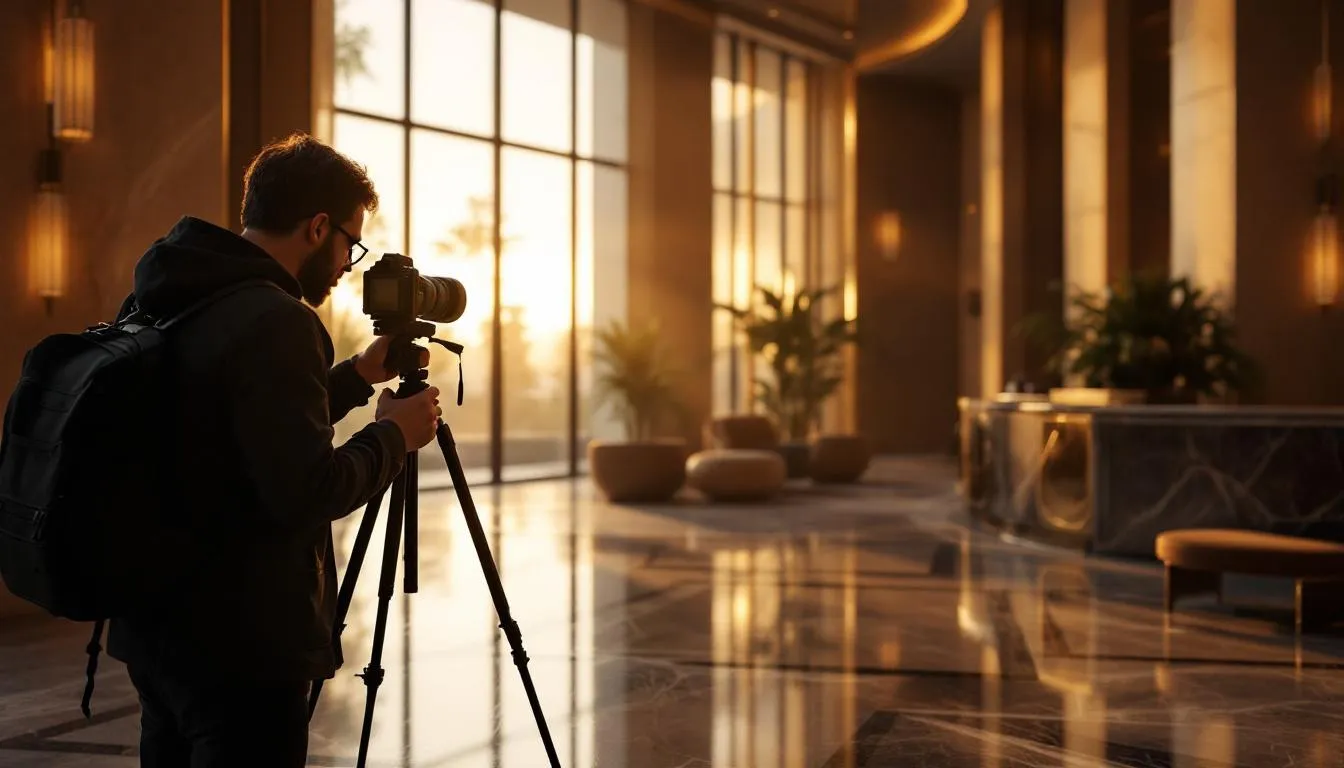
Hotel photography is the first impression — and the foundation of every hotel content marketing strategy. Before a guest reads a single review or checks a price, they’ve already formed an opinion based on your images. According to research from Expedia Group, hotel listings with quality photos see 63% higher click-through rates — and properties with unique images for each room type convert 11% better. Yet most hotels — especially independents — chronically underinvest in visual content. This guide covers what actually works, what it costs, and where AI fits in.
What Makes Hospitality Photography Actually Sell Rooms
There’s a meaningful difference between documenting a room and selling an experience. Most hotel photography falls into the first category — a flat, symmetrical shot of a bed, a bathroom mirror selfie angle of the shower, a wide shot of the pool with no one in it. These images answer the question “what does it look like?” They don’t answer the more important question: “what would it feel like to stay here?”
The photography that drives bookings shares a handful of consistent principles. Natural light is the single biggest differentiator — rooms photographed in the golden hour (the first and last hour of sunlight) look warmer, more inviting, and more expensive than the same rooms shot under artificial lighting at midday. If your current photo library was shot under fluorescent overhead lights, that alone may be suppressing your conversion rate.
Lifestyle staging matters more than most hoteliers realize. An empty room signals “vacancy.” A room with an open book on the nightstand, a half-full coffee cup on the balcony table, and a robe casually draped over a chair signals “someone just stepped out for a walk and they’re having a great time.” You’re not trying to show what the room contains — you’re trying to make the viewer imagine themselves in it. This principle holds for luxury properties and boutique hotels alike.
Detail shots are often the most overlooked category. The texture of high-thread-count linens. The steam rising from a coffee cup against a window with a view. The glow of candlelight on a bathroom countertop. These micro-moments don’t show up in standard real estate-style photography, but they’re the images that get saved to Pinterest boards and shared on Instagram — and they signal quality in a way that a wide-angle room shot simply can’t.
Twilight exteriors deserve their own mention. A property photographed at dusk — interior lights glowing, sky transitioning from blue to orange — almost always outperforms the same property shot in flat midday light. If you only do one upgrade to your photography, adding a single twilight exterior shot will give you the highest return.
Hotel Photography Pricing: What to Expect
Hotel photography pricing varies enormously based on who you hire, what’s included, and where your property is located. Here’s a realistic breakdown of what you can expect across the three main tiers:
| Freelance Photographer | Agency / Full-Service | AI-Generated | |
|---|---|---|---|
| Cost | $500–$2,000/day | $3,000–$10,000/property | $500–$2,000 full package |
| Turnaround | 1–2 weeks | 2–4 weeks | 3–7 days |
| Deliverables | 50–150 edited images | Full library + styling + video | 50+ images, multiple formats |
| On-site disruption | 1–2 days | 2–5 days | None |
| Revisions | Limited, extra cost | 1–2 rounds included | Easy, usually included |
| Best for | Small properties, tight budgets | Luxury brands, major launches | Supplements, seasonal updates, scale |
The most common mistake hotels make is treating photography as a one-time expense. Visual content depreciates. A photo library from three years ago likely shows furniture, finishes, or décor that has since changed — and guests who arrive expecting what they saw online will notice the discrepancy. Budget for refreshes, not just one-time shoots.
DIY vs. Professional vs. AI: Which Is Right for Your Property?
The honest answer is: it depends on what you’re trying to accomplish, what your budget allows, and where the images will be used. Here’s a practical decision framework:
DIY (Phone / DSLR)
Works for: Social media stories, interim content while a professional shoot is scheduled, behind-the-scenes moments.
Avoid for: OTA listings (Booking.com, Expedia), your website hero images, or any primary marketing material.
Budget: ~$0 (your time). ROI: Low for primary content; acceptable for ephemeral social.
Professional Photographer
Works for: Core property library, launch photography, luxury positioning, editorial placements, and any use case where 100% accuracy to the physical space is required.
Avoid for: High-volume content needs or budget-constrained properties where ROI is hard to justify.
Budget: $500–$10,000+. ROI: High when images are used across multiple channels and refreshed periodically.
AI-Generated
Works for: Supplementary visuals, seasonal variations, aerial/exterior concepts, mood variations, scaled content across multiple properties, and social media volume.
Avoid for: Replacing authentic photography entirely — guests expect accuracy to the actual property.
Budget: $500–$2,000 for a full package. ROI: Excellent for properties that need content volume at low cost.
The most effective approach for most properties is a hybrid: a professional photographer for the core library (bedrooms, lobby, key amenities), supplemented by AI-generated content for seasonal variations, platform-specific formats, and the kind of high-volume social content that would be prohibitively expensive to shoot traditionally. Browse examples of this hybrid approach in our gallery, or explore our full range of creative services.
Tips for Better Hotel Photography
Whether you’re briefing a professional photographer or trying to improve your own shots before a proper shoot, these six principles will meaningfully improve your results:
- Shoot at golden hour. The hour after sunrise and before sunset transforms ordinary spaces. Schedule exterior shots and rooms with significant window light during these windows. The difference in warmth and depth is not subtle.
- Remove all personal items. Charging cables, toiletry bags, room-service trays, staff bags, maintenance carts — anything that breaks the illusion of a pristine, guest-ready space should be removed before the shutter opens. Walk through with fresh eyes before every shot.
- Shoot from corners for depth. Corner-to-corner angles create a sense of spaciousness even in small rooms. Straight-on shots of beds or desks compress the space and make everything look smaller than it is. Always try the corner angle first.
- Include lifestyle elements. Open books, filled wine glasses, a laptop on the desk, a robe draped over a chair — these props signal occupation and invite the viewer to imagine themselves in the scene. Keep it subtle: one or two elements per shot, not a full staging production.
- Capture multiple angles of every space. OTAs like Booking.com reward properties with 20+ photos per listing with higher placement in search results. Shoot each room from at least three angles: wide establishing, mid-shot focused on the bed or key feature, and close detail. The algorithm rewards volume; guests reward variety.
- Think platform-first. Instagram Stories and Reels are vertical (9:16). OTA listings are landscape (3:2 or 16:9). Google Hotel ads favor square crops. Brief your photographer for all three formats, or ensure your compositions have enough headroom and side room to crop for each platform without losing the key subject.
How AI Is Changing the Economics
The most important thing to understand about AI in hotel photography is what it isn’t: it isn’t a replacement for a real shoot of your real property. Guests book based on expectations. If they arrive and find something meaningfully different from what they saw in your photos, the review will reflect that. Accuracy to the actual space is non-negotiable for your primary listing images.
Where AI genuinely changes the economics is in the supplementary content category — the content that sits alongside your core photography and extends its reach. Consider a property that did a professional shoot in summer. Guests browsing in November want to know what the property feels like in winter. A traditional answer: reshoot, costing thousands. An AI-assisted answer: generate winter mood variations from your existing summer photography at a fraction of the cost.
The same logic applies to aerial views (expensive to capture with a drone, easier to generate with AI for properties without interesting immediate surroundings), alternative lighting moods (romantic candlelit vs. bright and airy daytime), and platform-specific crops and formats. AI doesn’t replace what was shot — it multiplies it.
This is the same economic shift driving adoption in hotel video production. If you’re curious how the same principles apply to video, our piece on AI hotel video production covers the mechanics in detail. And for a broader view of how visual content fits into a hotel’s marketing strategy, see our guide on hotel content marketing.
The hotels that will benefit most from AI-assisted photography aren’t the luxury flagships with six-figure content budgets — they’re the independents, boutique properties, and vacation rental hosts who currently have two bad options: underinvest in visual content and lose bookings, or overspend on photography and erode margins. AI opens a third path: a strong core library from a professional shoot, extended by AI-generated supplementary content that keeps the visual presence fresh without requiring a full reshoot every season. See how our hotel production service puts this into practice.
Ready to elevate your property's visual content?
We work with hotels, resorts, and vacation rentals to build visual content that converts browsers into guests. Whether you need a core photo library, AI-supplemented seasonal content, or a full visual strategy — we can help.
See Hotel ServicesReady to elevate your property's visual identity?
We work with luxury hotels and resort groups to build visual content systems that scale — consistent brand quality across every property.