Luxury Hotel Visual Marketing Guide
AI Labster
AI Creative Studio
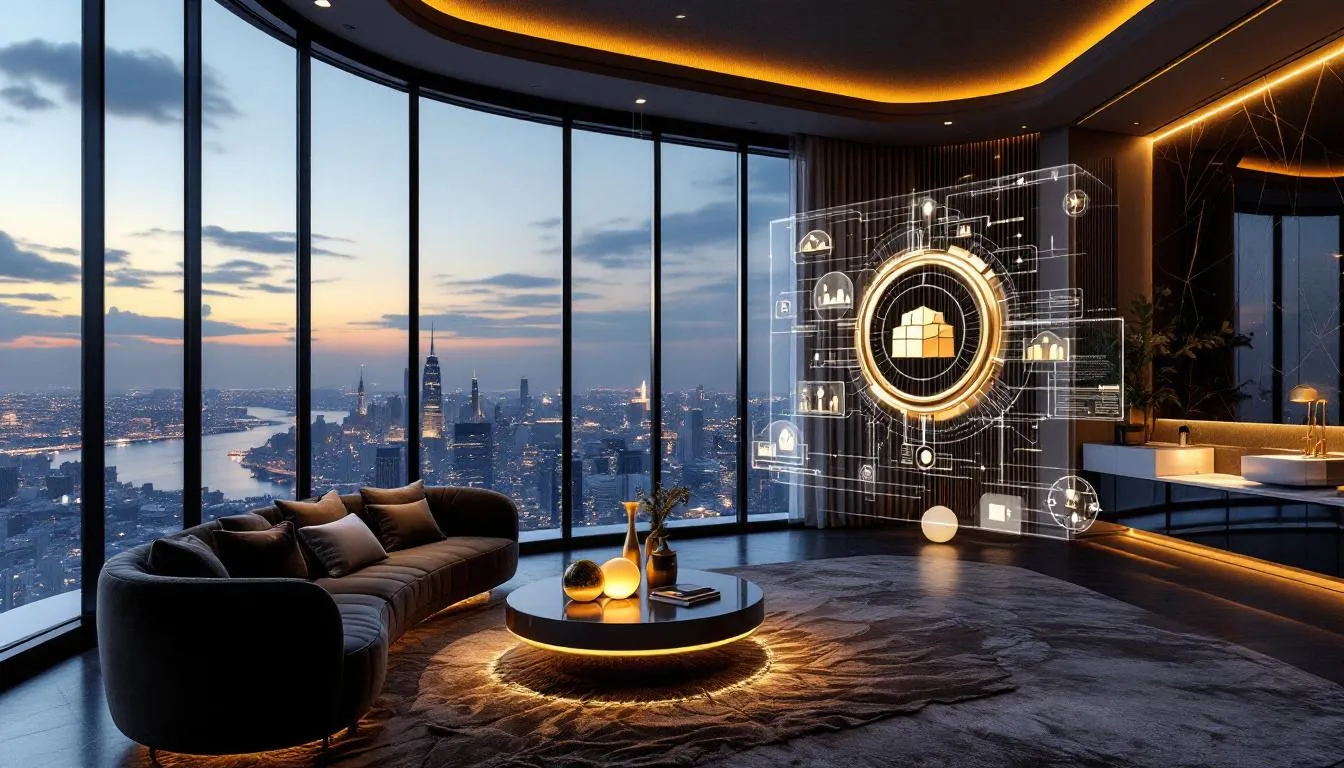
Luxury travelers don’t book on price — they book on feeling. The visual content a premium hotel puts out isn’t just marketing; it’s a promise. And most luxury properties are breaking that promise with mediocre visuals. At AI Labster, we work with premium brands to close that gap.
The Visual Standard Luxury Guests Expect
Luxury travelers research their trips differently than budget travelers. Studies show they spend 2–3x more time vetting properties before committing to a booking, and visual content is the primary lens through which they make that judgment. Before a guest ever reads your room descriptions or checks your amenities list, they’ve already formed an opinion based on what they’ve seen.
The standard they expect is high — and non-negotiable. Editorial-quality photography that conveys atmosphere, not just room dimensions. Cinematic video that tells a story about how it feels to be there. A consistent visual brand across every touchpoint: your website, Instagram feed, OTA listings, email campaigns, and paid ads. Any weak link in that visual chain signals that the property doesn’t take its presentation seriously.
The data backs this up. According to Skift Research, 92% of luxury travelers say visual content quality directly influences their perception of a hotel — not just their interest, but their assessment of the property’s quality tier. Poor visuals don’t just fail to convert; they actively downgrade how guests categorize your property.
What Top Luxury Brands Get Right
The world’s leading luxury hotel brands didn’t arrive at their visual identity by accident. Each has built a recognizable aesthetic that communicates their positioning before a single word is read. What they share isn’t a single visual style — it’s discipline. Every image, every video, every social post is held to the same standard and filtered through the same creative vision.
Aman
Minimalist and aspirational. Aman’s visual language is defined by negative space, natural light, and architectural purity. Nothing is excessive. The imagery whispers exclusivity rather than shouting it.
Key takeaway: Restraint is a luxury signal. Less content, executed perfectly, communicates more than an abundance of mediocre shots.
Four Seasons
Lifestyle-driven, human-centered. Four Seasons content shows people living their best lives in beautiful spaces — not just the spaces themselves. The brand sells the experience, not the inventory.
Key takeaway: Guests buy experiences, not rooms. Visual content that centers emotion and lifestyle converts better than property showcases.
Rosewood
Cultural immersion as the core narrative. Rosewood’s visual content is deeply tied to place — each property tells a story rooted in its local culture, architecture, and landscape. No two properties look the same, yet the brand is instantly recognizable.
Key takeaway: Brand consistency doesn’t mean visual uniformity. A strong brand framework can flex across radically different properties.
The Common Thread
Despite their different aesthetics, these brands share three things: rigorous consistency, cinematic quality in every frame, and storytelling that prioritizes emotional resonance over feature-listing.
Key takeaway: Great luxury visual content isn’t about showing everything the property offers — it’s about making the viewer feel something specific.
The Multi-Property Challenge
For independent luxury properties, maintaining visual standards is challenging but manageable. For luxury hotel groups operating 5, 15, or 50 properties? It becomes a logistical and financial problem that most groups handle poorly, if at all.
Each property in a luxury collection needs visual content that is simultaneously unique to that property and unmistakably on-brand for the parent company. A guest who stays at three of your properties across two continents should experience visual coherence — different locations, same quality of light, same compositional sensibility, same emotional register.
With traditional production, achieving this means sending the same creative team (or heavily briefed local teams) to every property for separate shoots. At $20,000–$50,000 per property, a 20-property group is looking at $400K–$1M in production spend just to refresh their visual content library — assuming everything goes smoothly, which it rarely does. Weather, scheduling, room availability, and local permitting issues routinely extend timelines and inflate budgets.
The result, in most cases, is that some properties get properly shot and others get deprioritized. The flagship property looks incredible. The properties in secondary markets look like they were shot on a different brief — because they were. This inconsistency undermines the premium positioning of the entire group.
How AI Maintains Brand Consistency at Scale
This is where AI production fundamentally changes the economics and logistics of luxury hotel marketing. Unlike traditional production, which requires a physical crew at each location, AI can lock in a precise visual style — specific color palette, lighting mood, compositional rules, tonal range — and apply it with perfect consistency across every property in a portfolio.
The process starts with developing a visual style framework for the group. Working from brand guidelines, existing photography, and creative direction, we establish the exact parameters that define the brand’s visual identity. That framework then becomes the production spec for every property — whether it’s a resort in the Maldives or a city hotel in London. The AI pipeline ensures that each property’s content is rendered through the same visual lens, while still reflecting that property’s unique architecture, location, and character.
For more on how AI video technology is reshaping hospitality production workflows, see our piece on AI hotel video production.
$20K–$50K
Traditional cost per property
$3K–$8K
AI production per property
Weeks → Days
Turnaround reduction
The cost difference compounds with scale. A 20-property luxury group that would spend $600K–$1M on a traditional visual content refresh can achieve the same scope — with greater consistency — for $60K–$160K. The savings don’t just come from lower production costs; they come from eliminating the coordination overhead, travel expenses, and opportunity costs associated with traditional multi-location shoots. See the quality of this approach firsthand in our portfolio gallery.
Social Media and the Luxury Guest Journey
The booking journey for a luxury traveler rarely starts on a booking platform. It starts on Instagram. A stunning hotel image appears in a feed, gets saved to a collection, gets researched further, eventually leads to a Google search, a website visit, and — if the visual experience holds up across all those touchpoints — a booking.
Instagram and Pinterest function as the discovery layer for the entire luxury travel category. They’re where aspirational travel content lives, where dream hotels are found, and where the initial emotional connection is formed. If your property isn’t showing up with compelling content in these channels, you’re invisible to the dreaming phase of the booking journey — and you can’t convert guests you’ve never reached.
Short-form video has added another critical dimension. Instagram Reels and TikTok have become primary awareness channels for luxury travel content. A 15-second clip of a stunning villa at golden hour, with the right sound and pacing, can reach millions of people organically — the algorithmic equivalent of a front-page travel magazine feature, at zero media spend. But the content has to be cinematic. Low-quality video performs worse than no video in the luxury segment; it actively signals the wrong tier.
Platform-specific content also matters more than most luxury brands acknowledge. The aspect ratio, pacing, and even the color grading that performs on Instagram differs from what performs on Pinterest or TikTok. A single piece of hero content needs to be adapted, not just resized, for each channel. For a full breakdown of platform strategy and content calendars for hospitality brands, see our guide to hotel content marketing. For destination-level campaigns that go beyond individual properties, our piece on tourism video production covers the broader landscape.
— Leonidas Sfyris, CTO & Founder at AI Labster“In luxury hospitality, visual content isn’t a marketing expense — it’s a product decision. The way your hotel looks online is the product your guest is evaluating. Make it match the physical reality.”
Building a Visual Content Strategy That Holds
The luxury hotels winning on visual content aren’t just producing great individual pieces — they’re operating a content system. That means having clear brand guidelines that translate to visual specs, a production process that can execute those specs consistently, a content calendar that keeps all channels fresh, and a feedback loop that tracks which content actually drives engagement and conversions.
Most luxury properties have brand guidelines in a PDF somewhere, but those guidelines rarely make it into actual production briefs in a way that ensures consistency. The creative director knows what the brand looks like; the local photographer they hired for the secondary property shoot does not. That gap is where visual consistency breaks down.
AI production solves this by encoding the brand spec directly into the production pipeline. The visual style framework isn’t a document someone might interpret differently — it’s a set of parameters that generate consistent output every time. Updates to the brand are implemented once and propagate across all future production. When the brand evolves, the content evolves with it — without a brand-wide reshoot.
For luxury hotel groups considering this approach, the starting point is a visual audit: what does your current content library actually look like across all properties and channels? Most groups discover more inconsistency than they expected. That audit becomes the baseline for a production strategy that prioritizes the highest-impact gaps — usually the properties with the weakest content, serving the highest-value guest segments. Reach out to our team to start that conversation, or explore how virtual tours can complement your video content strategy.
Ready to elevate your property's visual identity?
We work with luxury hotels and resort groups to build visual content systems that scale — consistent brand quality across every property, at a fraction of traditional production cost.
See Hotel ServicesReady to elevate your property's visual identity?
We work with luxury hotels and resort groups to build visual content systems that scale — consistent brand quality across every property.